




February 24, 2026
By Elena Sperry-Fernandez, PPTA Intern
February is Multifocal Motor Neuropathy (MMN) Awareness Month. MMN is a rare, chronic neurological disorder that affects a person’s motor nerves, leading to progressive muscle weakness. Only around 3,000-6,000 people in the United States are diagnosed with the disease. Most people will go their whole lives never hearing about the disease, but for me, it is a part of my everyday life.
In 2019, when I was a freshman in high school, my dad started experiencing muscle weakness. It started in his right arm, a subtle weakness that rapidly progressed. After just a few weeks of weakness and trouble, he could barely pick up a mug of coffee or give my sisters and me a thumbs up. For months, we wrote it off as over-exercise, but the issue started to feel real when we saw his muscle mass deteriorate.
My dad was diagnosed with MMN in 2020 after almost two years of seeing seven different neurologists and being misdiagnosed with ALS twice. After experiencing ongoing issues with mobility and seeing rapid muscle deterioration, he was finally given a loading dose of intravenous immunoglobulin (IVIG) — a plasma-derived therapy and the standard treatment for MMN. On the fifth day after his final infusion, he was finally able to manage to give my sisters and me a thumbs up, something he had been unable to do for over a year; a moment I will never forget.
During MMN Awareness Month I am reminded not only of the challenges the condition presents but also of the remarkable network of medical professionals, researchers, and plasma donors who make these treatments possible for people like my dad.
MMN primarily affects muscle strength, often in the hands and arms. Tasks that feel routine, like giving a thumbs up, lifting a mug of coffee, or buttoning a shirt become almost impossible. These impacts are not always visible or dramatic, but they are persistent. As a daughter and caregiver, I have become more aware of the subtle adjustments that my family and I have made like accommodating his treatment schedule and navigating life through this new lens.
What stands out about my family’s experience with MMN is not limitation, but adaptation. My father continues to work, maintain independence, and be a dad as he manages this chronic condition. Living with MMN requires patience and resilience, not just from the patient diagnosed but from the family alongside that individual.
Central to my dad’s ability to manage his MMN is IVIG. IVIG is not a cure, but it helps control symptoms and slow disease progression. My dad’s treatment involves regular infusions, which require consistency and coordination. Access to therapy is critical. Missed or delayed infusions can have severe consequences on disease management.
What makes IVIG possible is plasma donation. Each infusion represents the generosity of many donors who choose to help patients they may never meet. For families like mine, plasma donation is a reminder that rare disease treatment depends on a reliable and sustainable plasma supply.
We are so deeply grateful for the neurologists and doctors who recognize and diagnose rare conditions like MMN, the nurses and infusion staff who administer treatment, and the researchers and industry professionals who continue to refine and advance plasma-derived therapies.
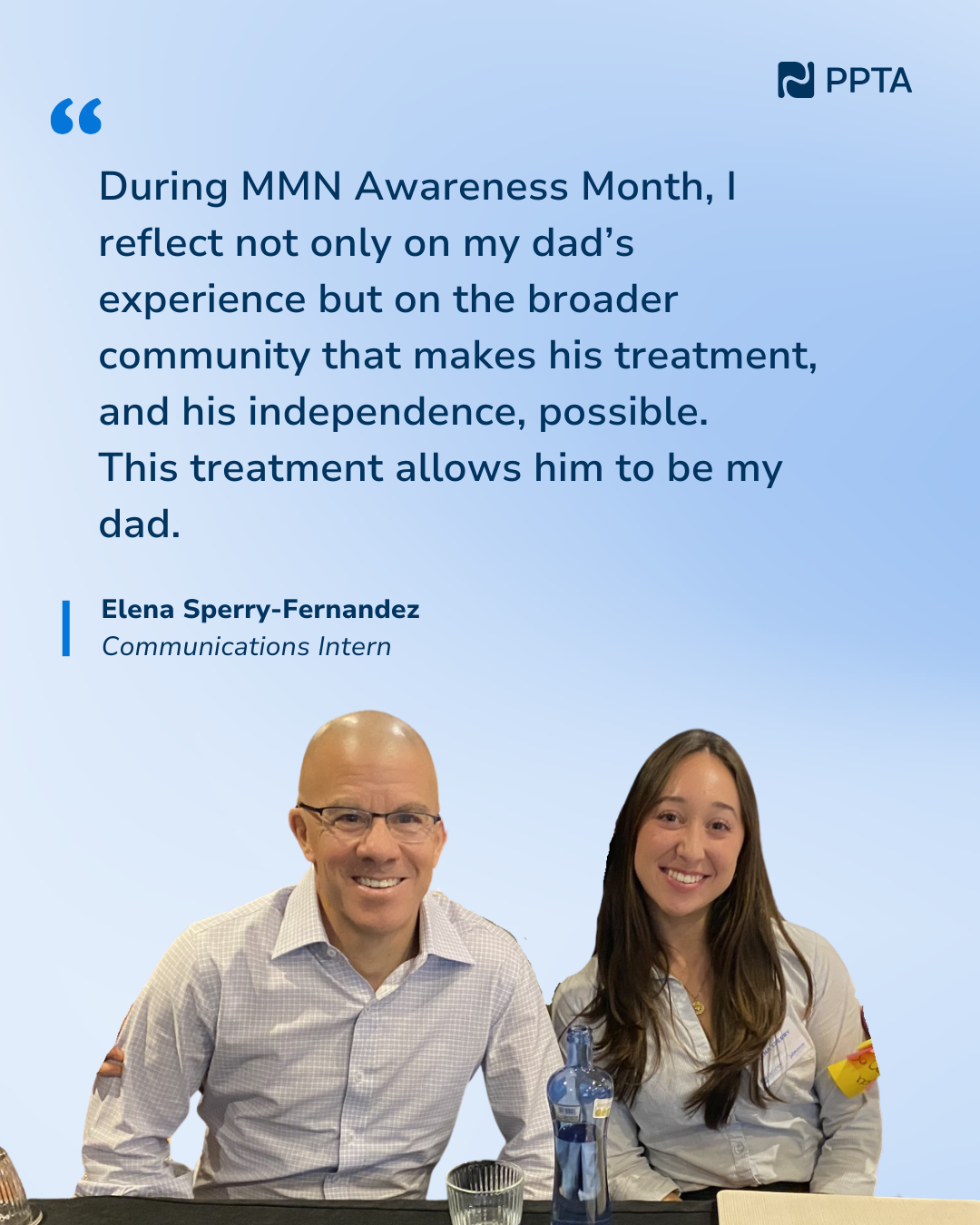
Awareness matters because rare diseases are often misunderstood or overlooked. Greater understanding can lead to earlier diagnosis, stronger support systems, and continued innovation in treatment. During MMN Awareness Month, I reflect not only on my dad’s experience but on the broader community that makes his treatment, and his independence, possible. This treatment allows him to be my dad.
Living with MMN is an ongoing journey. Thanks to medical professionals, progress, and plasma donors, this journey is supported by science and hope.